HOW THE SUPREME COURT JUST PROTECTED TRANS RIGHTS, FELONS, DRUG USERS AND CUT MASS INCARCERATION
DISFAVORED MINORITIES PROTECTED BY 2 DECISIONS THAT STRIP LAWMAKERS OF THE POWER TO DISARM ENTIRE GROUPS OF AMERICANS
MALONE, NEW YORK JUNE 26, 2026 OPINION
Hidden in the dense legalese that comes with Supreme Court decisions interpreting the Constitution are two end-of-term blockbusters that protect the civil rights of minorities and take a big bite out of mass-incarceration to boot.
United States v Hemani, decided June 18, unanimously held a part-time pot smoker could have a handgun. Wolford v Lopez, handed down Thursday, upheld the right of licensed handgun owners to carry their gun into privately-owned places held open to the public—unless the owner explicitly excludes them.
In reaching both of these decisions and protecting Ali Hemani and Jason Wolford, the Court stripped federal and state lawmakers of the power to disarm entire groups of Americans. Not just some groups. All groups. However disfavored or hated by the majority they may be.
The disfavored, minority groups now protected include drug users, trans folk and even former felons.
Its tempting to think laws disarming entire groups of disfavored minorities are only a thing of the past. They are not. Consider the 2025 Minneapolis Catholic School Shooting. The trans perp in that case, Robin M. Westman, led the US Dep't of Justice to leak an informal proposal to ban all transgender Americans from having guns. It went nowhere, this time.
Such a class-wide ban, if it had been implemented, would not have lasted a second in a courtroom under the Supreme Court's rulings in Hemani and Wolford. Here's why.
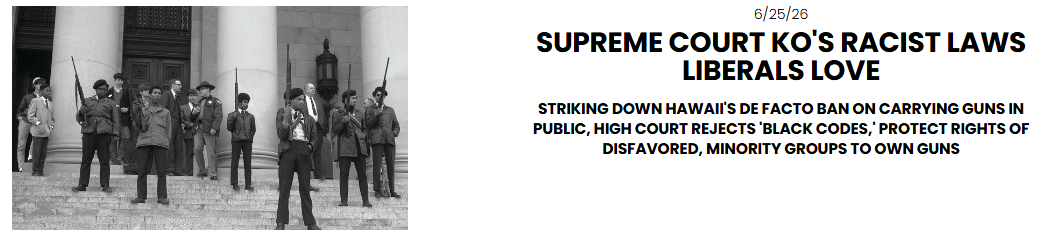
In 2022, federal agents searched the house Mr. Hemeni lived in with his parents in Texas. Agents found marijuana. He told them he smoked “about every other day.” They also found a handgun. Six months later, Mr. Hemani was charged with violating the federal law prohibiting gun possession by “drug users” and addicts.
The law, in effect, represents Congress's determination that all illegal "drug users" are dangerous or incapacitated by addiction.
In fact, not all drug users are dangerous or addicted. Many are casual or occasional users, fully-functional in everyday life. They have a toke in the evening instead of a drink. They help themselves to their partner's prescription pills if they have trouble sleeping. They take psychedelics to ease PTSD. In the morning, they drive their kids to school then go to work.
Based on the facts of Mr. Hemeni’s case, the Supreme Court dismissed the charge because prosecutors hadn't proved Mr. Hemani himself was dangerous or addicted. It didn't matter that Congress had, in effect, determined that all drug users were dangerous and addicted—the Constitution required individualized proof Mr. Hemeni himself was dangerous or addicted—but there was none.
The rules the Court's decision in Hemani creates are not limited to drug users.
By holding that the Constitution requires individualized consideration and proof in Mr. Hemani's case, the Court effectively gutted all federal and state laws that make simple gun possession by members of minority, disfavored groups a crime. Those laws can no longer be enforced as written—they now require individualized consideration and proof of dangerousness, addiction or incapacitation of some kind.
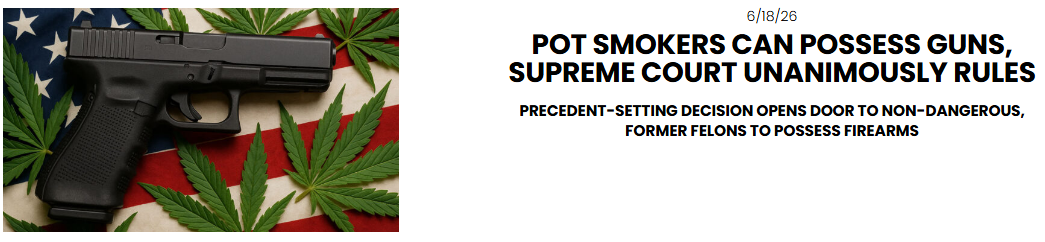
Other minority, disfavored groups protected by Hemani include felons and transgenders.
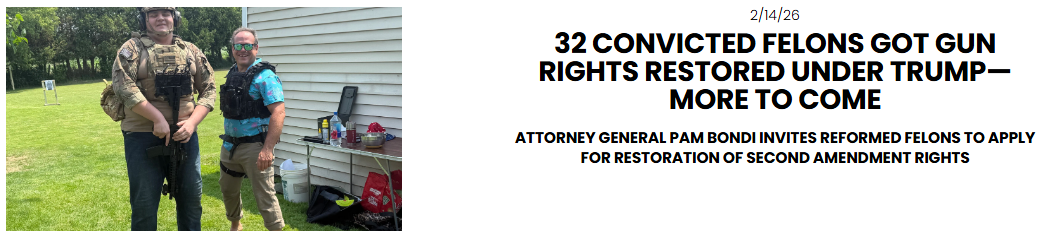
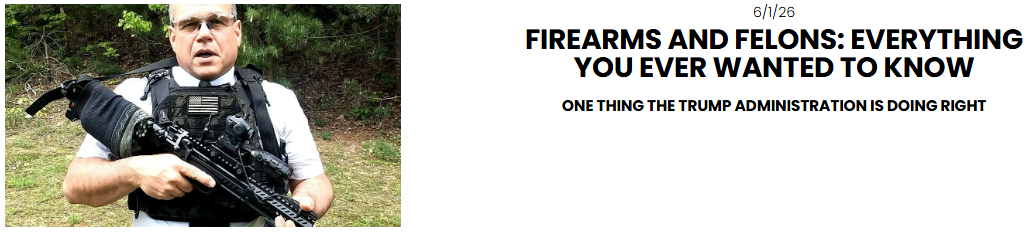
The Supreme Court's decision in Wolford reinforces its holding in Hemani that legislatures can't ban disfavored groups from having guns.
The Supreme Court ruled in 2022 that present-day restrictions on Second Amendment rights must be “consistent with the Nation’s historical tradition of firearm regulation” to be legal. In upholding Mr. Wolford's claim, the Court rejected Hawaii's argument that its law was comparable to a racist 19th Century Black Code law that disarmed freed slaves and was thus “consistent with the Nation’s historical tradition of firearm regulation."
The Court's criticism of Hawaii's claim, based on a racist law, was scathing.
"Unless we put history entirely out of our minds," Justice Samuel Alito wrote for the Court, "Hawaii’s claim that this tainted artifact illuminates the original understanding of the right to keep and bear arms cannot be taken seriously."
In other words, it was legally frivolous. Not even worth considering.
Justice Amy Coney Barrett was even harsher. She joined the majority opinion but also penned a separate concurring opinion just to bash the Black Codes.
"It is beyond me why Hawaii would claim that these vile laws can justify its present-day restriction," she wrote.
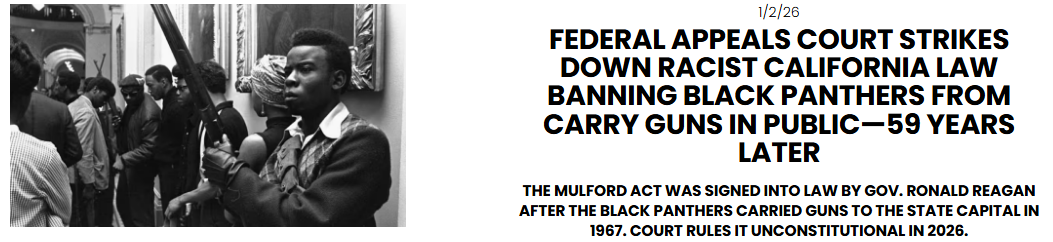
With federal firearms prosecutions now limited to dangerous, addicted or incapacitated people, there will likely be a substantial, nationwide reduction in the overall number of people prosecuted and sent to federal prison for illegal gun possession.
A total of 66,662 people were convicted of federal crimes in 2025, according to the US Sentencing Commission. About 5,500 were convicted of a federal gun crime, the Commission's stats say. Their average sentence was over four years—51 months.
"Nearly 96 percent" of these 5,500 cases were for only "the unlawful receipt, possession or transportation of a firearm," according to the stats. Not the gun's use in a crime. Simple possession alone. Slightly more than 5,300 people.
Many if not most of these victimless crimes can no longer be prosecuted after Hemani because many of these defendants are not dangerous, addicted or incapacitated.
In this way, the Supreme Court just cut mass incarceration and protected the civil rights of trans Americans, casual drug users and former, reformed felons.
For tips or corrections, The Free Lance can be reached at jasonbnicholas@gmail.com or, if you prefer, thefreelancenews@proton.me.