THE PRISON REFORM LEGACY OF GLORIA STEINEM
"GLORIA LOVED THE TRADITION OF LIGHTING SIGNAL FIRES ON HILLS TO LIGHT THE WAY TO THE OTHER SIDE OF THE MOUNTAIN.”
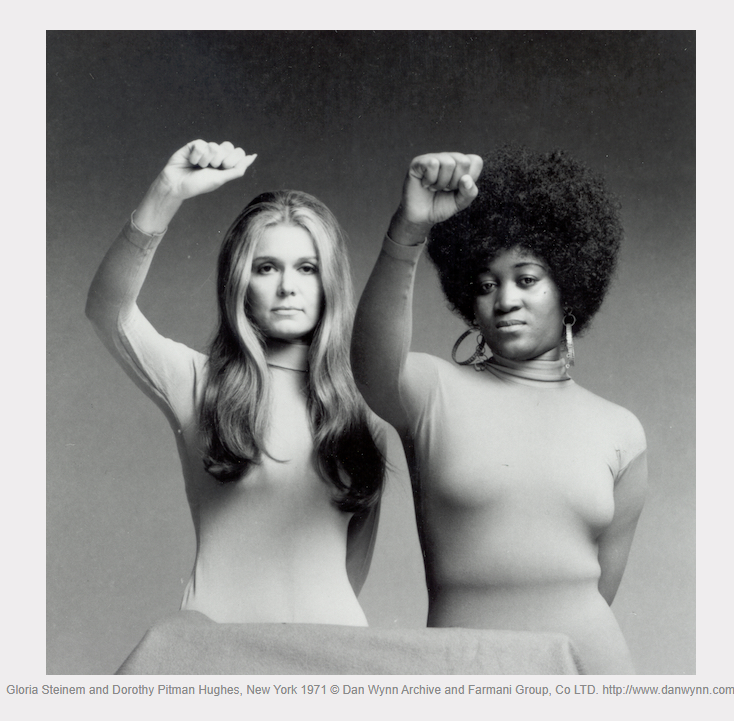
MALONE, NEW YORK Sept. 4, 2026
A titan of the Women's Liberation Movement has died.
Gloria Steinem will be primarily celebrated for her Feminist achievements, but criminal justice reform was part of her life's work from the very beginning. It makes sense once you know the Women's Liberation Movement grew out of the Black Power Movement of the 1960s and was similarly surveilled by government agents.
Steinem continued her criminal justice advocacy into her 80s in the 20-teens, when she deployed her star power to advocate for female prisoners.
"Out of sight may mean out of mind—and heart. For women in prison, this is the tragedy," Steinem wrote in Ms. magazine in 2018—the magazine she co-founded in 1972. "For the rest of us, this invisibility keeps us from realizing how much women in prison may resemble and could be you and me."
Steinem got her big break pulling a Nellie Bly-style ruse.
Famously, Bly feigned mental illness in 1887 so she could report on the conditions on Blackwell's Island, where New York City sent insane people. The explosive report that followed, Ten Days in a Mad House, is celebrated to this day as an extraordinary feat that kick-started a distinct kind of highly-personal reporting called "immersive journalism."
A la Bly, in 1963 Steinem signed up to work as a Playboy Bunny in the City's Playboy Club. She wasn't desperate for the cash, she was there to investigate "What really goes on in their 'glamorous and exciting world?,'" as the magazine that paid her to do it wrote.
Steinem's exposé, “A Bunny’s Tale,” would've made Bly smile— even if Steinem herself later regretted it.
Later in the decade, Steinem began helping women win more economic power and workplace rights, including the rights to equal pay and to be free from sexual harassment. She also argued men had to take more responsibility for domestic chores, which many eventually did.
Steinem also co-founded the Women's Action Alliance, a feminist organization dedicated to fighting sexism, the National Women’s Political Caucus, a grassroots organization aimed at increasing women’s participation in politics and the Women’s Media Center, intended to increase their participation in mainstream news.
The Women's Liberation Movement Steinem became the face of grew out of the Civil Rights Movement, Steinem reported in her famous 1969 broadside, After Black Power, Women’s Liberation. Women who had joined the Civil Rights Movement, she wrote, were "influenced by it," and were "jailed, beaten and Maced side-by-side with their social-activist male counterparts."
"But once back in the" activist office, "they found themselves typing and making coffee." Finally, "women began to 'rap' (talk, analyze, in radical-ese) about their essential second-classness, forming women’s caucuses inside the Movement in much the same way Black Power groups had done."
Steinem knew what she was talking about: she served as treasurer of the Angela Davis Defense Fund in the early 1970s.
Davis, a radical college professor, was accused of murder for buying the guns 17-year-old Jonathan P. Jackson used to take a judge and three jurors hostage. Jackson hoped to free his Black Panther brother from a California state prison. Jackson, the judge and two of three Black Panthers he did manage to temporarily free were shot dead by police on Aug. 7, 1970.
Davis was acquitted in 1972.
Steinem founded Ms. magazine the same year. Its first edition included a radical petition signed by 53 prominent American women—including Steinem herself—demanding abortion be de-criminalized, We Have Had Abortions. The US Supreme Court did just that the following year when it decided Roe v Wade. The Washington Post said the Ms. report “changed the course of the abortion rights movement.” Roe stood until 2022.
In 2004, Steinem started the "Ms. magazine Prison and Domestic Violence Shelter Program." The program sends copies of the magazine to women in prisons and shelters across America. In 2023, Steinem reported copies were sent "to 5,418 federal, state and county prisoners."
The program, Steinem wrote, "lets women on the inside know they are not alone."
"Every American should be ashamed that this country puts a greater proportion of its citizens in prison than any other nation on earth," the fiery octogenarian charged, "because of racism, sexism, and also because in many states, the prison industrial complex allows corporations to build and run prisons for profit."
Ms. magazine publishes the work of journalist Victoria Law, who frequently covers prisons, Justine van der Leun, who covers how the criminal justice system treats women, and the formerly-incarcerated editorialist Chandra Bozelko.
In 2016, Steinem introduced a Vice News documentary, "Incarcerated Moms in Prison."
"The United States locks up more women than any other nation in the world, with over 200,000 behind bars," Steinem said in her introduction. "75% of those inmates are mothers and the primary caregivers to their children."
"The trauma this separation creates for both mother and child ripples for generations," Steinem explained, "fueling a self-perpetuating cycle that for millions is nearly impossible to escape."
That same year, Steinem was also involved in a fight to turn an abandoned state prison named Bayview in the Chelsea neighborhood of Manhattan into a "women's building" for women-centered social justice groups to use as a headquarters.
"If a women's prison can become a center for free women, anything seems possible," Steinem wrote in a social media post. "And it's the stories of women who were incarcerated here and are now creating this transformation that make you know how deep it is."
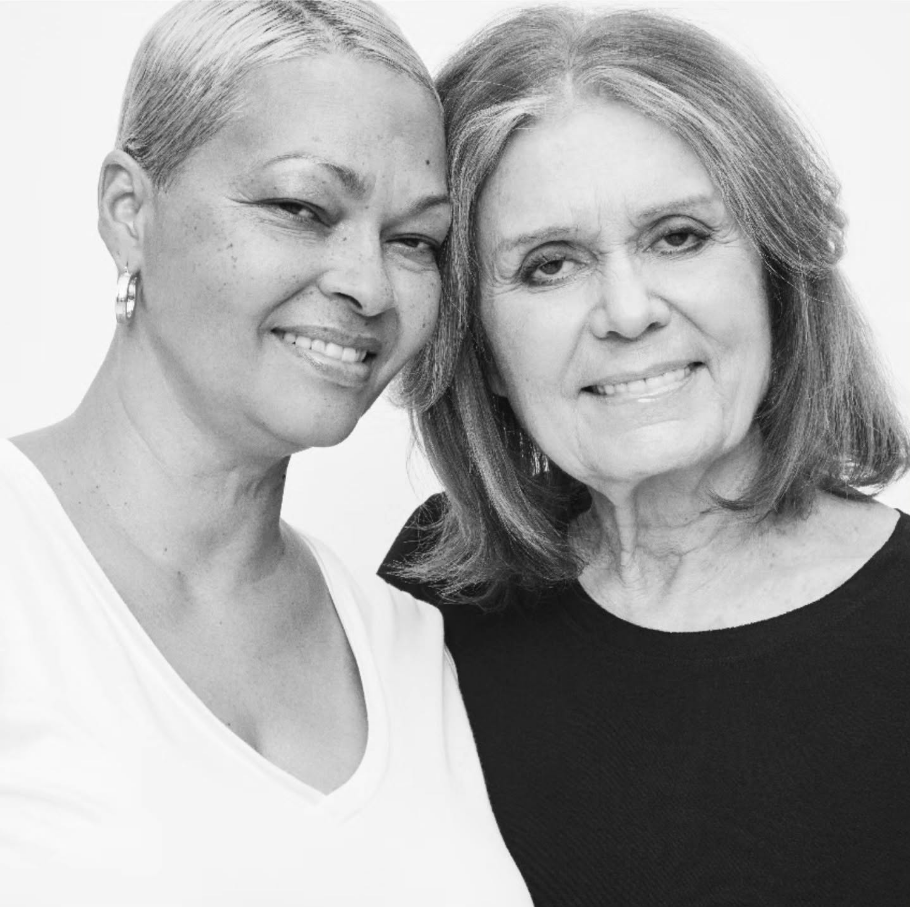
Dr. Donna Hyllton, formerly-incarcerated activist and write, and Gloria Steinem. Photo credit: unknown, courtesy of Donna Hylton.
During the fight to transform Bayview, Steinem met Dr. Donna Hylton, a formerly-incarcerated activist and writer who served 27 years for murder and also spoke at the 2017 Women's March in Washington. Hylton recalled meeting Steinem on Thursday.
Organizing with her, Hylton told The Free Lance News, "was wonderful. She had a lot of nice stories. Fun stories. Liberating stories. Movement stories."
But what really made Steinen an effective leader was her seemingly endless capacity to listen.
"Often times she wanted to hear about other people," Hylton said. "What they were going through. What they had been through."
"It wasn't really about her," Hylton added. "She wanted to bring other people to the light."
The following year, Steinem wrote a blurb for Hylton's prison memoir, A Little Piece of Light:
"Donna Hylton was punished for being born female, black, and brilliant—yet she survived to create her own life. A Little Piece of Light will tell you just how fragile—and how indestructible—the human spirit can be."
(The non-profit group backing the women's center in Bayview realized it bit off more than it could chew and killed the project in 2019. It's becoming affordable housing instead. Construction started in July.)
Also in 2017, Steinem joined forces with The Lipstick Lobby to sell lipstick to raise money for the unPrison Project, which educates women in prison to prepare them for life after their release.
"I chose the name 'In The Clear' because it speaks to the accessibility of this product—clear is universal and wearable for anyone and everyone who wants to make an impact," Steinem told the now-defunct women's lifestyle blog Hello Giggles.
"It also speaks to the fact these women now have a full, free life ahead of them," she added. "We all have a right to feel 'in the clear' regardless of our past."
Steinem and Davis—the radical academic—reunited at the 2017 Women's March in Washington, where they both spoke to the crowd.
Davis called for "an inclusive and intersectional Feminism" that stands against the "prison industrial complex." Steinem started by shouting out "those who will be communing with us at 1 p.m. in a silent minute for equality in ... prisons all over the world."
Steinem again threw her weight behind an effort to re-purpose a defunct state prison in New York City in 2022.
This time it was a shuttered work-release facility on Central Park North, the Lincoln Correctional Facility. Advocates wanted the City to use it to house its female jail inmates there, instead of on Riker's Island at the Rose M. Singer jail—known as “Rosie’s.”
“Women and gender-expansive at Rosie’s deserve safety, dignity and justice, and New York City can deliver with a Women’s Center for Justice at Lincoln,” Steinem wrote in a letter to city and state officials. “It would make us all proud to know that New York could set a precedent for decarceration.”
The women's proposal was rejected by the City in favor of a new female jail being built in the far reaches of Queens. Lincoln is slated to become affordable housing instead.
Perhaps still stung by her loss at turning Bayview, the former female jail in Chelsea, into a women's center, the Gloria Steinem Foundation announced in a social media post after Steinem's death on Wednesday that the Upper East Side townhouse she lived in for the last 50 years will become one instead.
The Foundation revealed Steinem's "commitment to her home becoming a center for social justice movements" and said "Gloria loved the tradition of lighting signal fires on hills to light the way to the other side of the mountain."
Dr. Hylton, the activist and writer, said Steinem's fighting spirit would live on.
"This is a person whose legacy is to continue," she said. "Its not just something in the past."
Referring to the social justice fight Steinem helped wage for decades, Hylton said "We still need to continue, sadly. Different time. Same situation. Getting worse actually."
Send tips or corrections to jasonbnicholas@gmail.com or, if you prefer, thefreelancenews@proton.me