EVEN TUFF GIRLZ SAY NEW YORK PRISON REFORM LAW GOES TOO FAR
HALT SOLITARY CONFINEMENT ACT WAS MEANT TO MAKE NEW YORK'S PRISONS MORE HUMANE. FEMALE PRISONERS SAY IT MAKES THEM MORE VIOLENT. WILL GOV. KATHY HOCHUL AND STATE LAWMAKERS FIX IT?
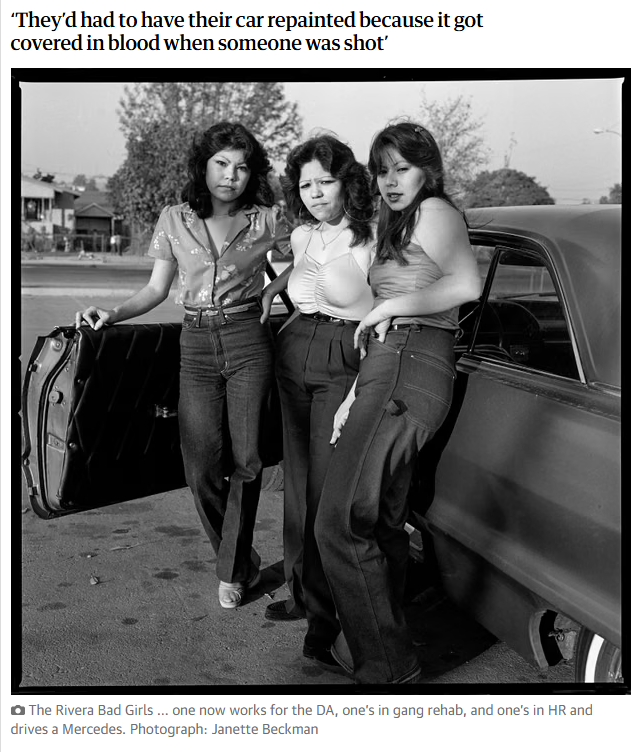
Girl gang in Los Angeles circa 1990. Life in Girls' Gang: Colors and Bloody Noses
BEDFORD HILLS, NEW YORK Dec. 17, 2025 Updated: Dec. 18, 2025 1:23 PM
It's not just the guards.
Even the toughest ladies jailed in New York's prisons say a law meant to make the state's correctional facilities more humane has back-fired and made them more violent.
"A lot of girls are getting sliced up here. A lot of girls are getting jumped," Carole Ntuli, 40, told The Free Lance from the Albion Correctional Facility. "It's out-of-control."
Ntuli has been in-and-out of Albion since 2010, she said. Compared to New York's 39 state prisons for men, the Empire State's three female prisons have long been known as relatively peaceful places where women who wanted to rehabilitate themselves could.
No more, Ntuli and two other women serving life sentences at the state's other two female prisons—the Bedford Hills and Taconic correctional facilities—told The Free Lance.
The women speaking out include one of New York's longest-serving female prisoners, Pamela Smart, 58. Taliyah Taylor, 43, is the third. Together with Ntuli, the three women have spent almost 70 years behind bars.
All three said the reform law, called the HALT Act, is behind the rise in violence. It may also be linked to increased drug use, the women suggested in face-to-face interviews conducted at the prisons in early December.
"Bedford has been a center of prison reform activism for decades,“ Dr. Donna Hylton, a formerly-incarcerated activist and writer who served 27 years for murder at Bedford and spoke at the 2017 Women's March in Washington, told The Free Lance. “We have to listen to what the women are saying."
”At the same time,” Hylton cautioned, “we have to be careful prison officials aren't sabotaging HALT and we have to also be careful not to treat the women as pawns."
While The Free Lance was investigating the impact of the HALT Act on New York's female prisons, the U.S. Department of Justice reported Dec. 9 that more women are "sexually victimized" at Bedford Hills than in any other prison in the Nation. (DOJ defines "sexual victimization" as any forced or coerced sex between prisoners, and any sex at all between prisoners and guards.)
Albion—where Ntuli is—is No. 3 on the DOJ’s list of prison "rape factories."
Ntuli is serving time in a New York State prison for women, but was assaulted by a man there Dec. 12.
At the time she was assaulted, Ntuli was confined in one of the allegedly more "humane alternatives to long-term solitary confinement" the HALT Act established. It started, Ntuli told me, while they were still locked in their cells in what the state prison system calls a "Residential Rehabilitation Unit" or "RRU." The HALT Act created the RRUs.
Once a prisoner is found guilty of alleged misconduct after an administrative hearing and serves up to the maximum allowed 15 days in solitary, they are transferred to an RRU.
Instead of prolonged solitary confinement, the HALT Act requires prisoners in RRUs be given 6-hours-a-day of "of daily out-of-cell congregate programming, services, treatment, recreation, activities and/or meals, with an additional minimum of one hour for recreation."
They're also given electronic tablets for several hours a day with e-mail access to the outside world if they can afford it.
The HALT Act specifies RRU programs "must be comparable to core programs and types of work assignments in general population," including "trauma-informed therapeutic programming." But Ntuli, other prisoners and officials I spoke to on background say the "treatment" available in RRUs amounts to watching movies or journaling because of chronic staffing shortages.
"All these things are being cancelled," Ntuli explained. "I barely even want to come out."
Not that the rehabilitation programming available to women in general population at Albion is any better.
"It's just a mess," Ntuli said. "Its nothing like consistent."

Sukeban: Japanese girl gangs in the 1970s. How Vicious Schoolgirl Gangs Sparked a Media Frenzy in Japan
Before they were let out of their RRU cells on Dec. 12, Ntuli says fellow prisoner Shyquest K. Powell "started poppin' shit" through their cell door and "threatening" her. Ntuli said she warned a sergeant and a lieutenant supervising the unit, but they let Powell and her out at the same time anyway. When they did, Ntuli said, Powell "ran toward me and attacked me."
"He's trying to punch me," Ntuli told me in a frantic telephone call minutes after the attack. "He's overpowering me because he's a man."
Powell, 25, was sentenced to 8 years for assault and grand larceny in 2021. He killed a retiree in a car crash while fleeing police after a boosting spree in an upstate mall, the Finger Lakes Times reports. Brett Rising, 66, suffered for a week before finally dying.
Ntuli is jailed for selling drugs and using counterfeit cash.
Powell entered the state prison system as a man, public records show. Later he was given a female state prison identification number and sent to Albion. Powell "assaulted another girl and got caught with a weapon," and that's why he was in the RRU, according to Ntuli.
After Powell pounded her with his fists, a guard pulled them off Ntuli. She told me her "whole face was bloody." Powell's man-strength punches, she said, left her with a "gash" in her face "about the size of a thumb."
Powell did not respond to an electronic message seeking comment.
The state agency that operates New York's prison system, the Department of Corrections and Community Supervision, or DOCCS, also did not respond to an invitation to comment.
While the Nation's incendiary debate over transgender rights has been focused on whether allowing irreversible sex-changes for kids is smart public policy and whether allowing genetic men to compete in women's sports is fair, in New York's prisons that debate is not so academic or measured in points on a scoreboard.
It's measured in blood, shed by women.
Ntuli blames the HALT Act for the increase in violence.
"They just lost control of their facility," she said. "Prison is not prison anymore."
But Ntuli's take is nuanced because it's informed by the "years" she said she spent in solitary before the HALT Act became law. While the main problem is lack of real consequences for misconduct, another part is the guards.
"They were very abusive before the HALT law," she said. Now, she explained, "they don't have the authority to abuse people so they not doing their job."
"Basically," Ntuli explained, "they don't care. They really not enforcing the rules. They smoking K2 and nobody does nothing."
New Jersey girl gang leaving court after members convicted in the 2006 Greenwich Village Assault Case. Photo credit: JB Nicholas.
The HALT Act was signed into law by then-Gov. Andrew Cuomo in 2021.
HALT stands for Humane Alternatives to Long-Term Solitary Confinement. It was intended to make prisons more humane by restricting the use of solitary confinement. Since the first modern prison was born in America after the Revolution, solitary confinement has been used as a tool to manage rule-breaking by prisoners that typically falls short of crimes. But for decades prison officials in New York abused the tool by keeping prisoners in solitary confinement for months and years—sometimes for trivial rule violations.
That abuse was a serious problem.
Experience has long shown and scientific study confirms, extended periods of solitary confinement drive people insane—the degree of which is typically tied to length of segregation. The longer the segregation, the crazier the prisoner becomes. Since the vast majority are eventually released, public safety is threatened by the release of unrehabilitated people who, in essence, were tortured by solitary confinement.
That's why the HALT Act presumptively caps the length of time a prisoner can be sent to solitary at 15 consecutive days and 20 total days in a 60-day period.
New York's prison guards are represented by a union called the New York State Correctional Officers & Police Benevolent Association. NYSCOPBA for short. The union opposed the HALT Act from the start. They warned it would lead to an increase in violence in prisons.
"A vote for HALT is a direct attack on labor and the law enforcement community," Mike Powers, then-president of NYSCOPBA, told WAMC Northeast Public Radio in 2019. "If passed we will hold them accountable for future prison violence, which is already at dangerous levels."
The HALT bill floundered in the state legislature until police in Minnesota murdered George Floyd in 2021. Floyd's killing sparked a national reckoning with police misconduct. That's when then-Gov. Andrew Cuomo signed the HALT Act into law.
NYSCOPBA sued to stop it from taking effect but lost. Federal Judge Mae A. D'Agostino dismissed the suit because, she wrote, the "allegation that the HALT Act will lead to an overall higher level of violence in New York prisons is too speculative."
It wasn’t. In 2025, after violence continued to spike, New York's prison guards launched an illegal "wildcat" strike Feb. 17. (New York's Taylor Law prohibits police, including correction officers, from striking.) Their No. 1 demand was repeal of the HALT Act.
Instead of working with the state legislature to amend HALT, Gov. Kathy Hochul ordered the guards to return to work and fired about 2,000 who refused. The 22-day long action was the longest strike by prison workers in American history.

Statistics released by DOCCS confirm violence has been rising steadily since HALT was enacted in 2021.
There were 1,177 assaults-on-staff and 1,107 prisoner-on-prisoner assaults in 2021, according to DOCCS' statistics. In 2024 those numbers rose, respectively, to 2,069 and 2,980. At the end of November 2025, there have been 1,612 assaults-on-staff and 2,435 prisoner-on-prisoner assaults.
While the year-end numbers may show a slight decline in violence in 2025, that's likely because of the strike.
"During that time period and even after, the inmate movement was limited so if they were locked in their cells there would be limited interaction with staff and other inmates," James Miller, NYSCOPBA's spokesman, told me in an emailed message.
"Bottom line," Miller added, "the statistics don’t lie, since HALT violence has risen to historic levels, even with a decrease in inmate population.”
But Michelle Bonet, a formerly-incarcerated activist and founder of a Facebook group dedicated to reforming New York's prison system she named “NYS DOCCS Federal oversight,” replied "Correlation is not causation."
"While it is appropriate to examine whether HALT is being implemented effectively," Bonet told me, "it is misleading to attribute current instability to HALT alone without examining the broader timeline of structural changes that occurred at the same time.”
"HALT was implemented amid sweeping economic, technological, and operational changes that reshaped daily life inside prisons," Bonet explains. "To isolate HALT as the cause of current conditions ignores how sudden shifts in illicit economies, combined with systemic instability, can generate conflict."
Since the end of the strike Mar. 10, New York has continued to lose prison guards, Chris Gelardi reported for New York Focus Dec. 10. National Guard troops activated during the strike remain deployed to replace missing guards throughout New York's prison system—including its female facilities.
The shortage of guards set in motion a slow-burning crisis that continues to this day.
In addition to increased violence, prisoners' access to visits, rehabilitative programs, recreation and almost everything else that makes prison life bearable has been restricted, increasing tensions behind the walls even more. The on-going crisis threatens to explode in a riot or take-over at any moment—like it did at Attica in 1971 or Bedford Hills in 1974.
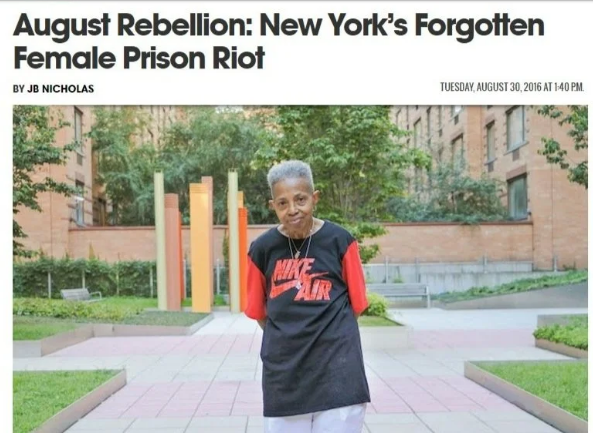
Carol Crooks ignited a revolt at New York’s maximum-security prison for women in 1974. August Rebellion: New York’s Forgoetten Female Prison Riot.
Pamela Smart, then 23, was convicted of masterminding the 1990 murder of her husband by her 15-year-old lover and his two friends. The trigger-puller and his two accomplices have all been released; she alone remains in prison.
Smart's 1991 trial was one of the first to be televised in the U.S. It riveted the Nation. "Sex, lies & murder" was just one of the salacious headlines the lurid tale spawned. Nicole Kidman played Smart in the 1995 movie, "To Die For." Helen Hunt played her in the made-for-TV version, "Murder in New Hampshire."
While Smart was convicted in the Granite State, prison officials transferred her to Bedford Hills in 1993. They claimed they did it for "security" reasons, but her murdered husband's mother, Judith, told United Press International she asked New Hampshire officials to transfer Smart to a harsher prison.
"We were asking a while ago back if she could possibly be moved," Judith Smart said, "because we felt that she had it really easy there."
Last May, New Hampshire's Republican governor Kelly Ayotte rejected Smart's last-ditch request just to be considered for a sentence reduction. Now 58, Smart has served 35 years of her true life sentence (no parole). She's collected college degrees, become a preacher and taught law to generations of female jailhouse lawyers.
Today, Smart is one of a triad of New York's longest-serving female prisoners and like a "den mother" to the women at Bedford Hills, Corey Kilgannon reported for the New York Times in 2023.
"There's more violence here than there ever was," Smart told me. "We used to have about one fight a week. Now we have 10 a day."
Like Ntuli, Smart blamed the HALT Act.
"The HALT Act is a big part of the problem," Smart explained. "Girls get in a fight, they go to the infirmary, then they're back on the same block or in the same dorm."
"Last night," Smart told me Dec. 14, "there was a 10-man fight in the yard. No one is locked up. They're all walking around thinking about how they're going to get so-and-so back because they slipped and didn't get a fair one."
"And," she added, "their wives or their husbands or their aunts or uncles or whatever wants revenge too."
Because of HALT, Smart explained, "There's no cool down period."
Before HALT, "if you got into a fight you would be keep-locked before the hearing. Then you'd get such-and-such amount of time after the hearing. 30 days, 60 days. 90 or 120 days if you cut someone. Now girls don't get locked up at all."
Like Ntuli said about guards at Albion, Smart said another part of the problem was guards at Bedford Hills were discouraged from enforcing the rules by HALT.
"After HALT, COs got tired of writing tickets that went nowhere so they just stopped writing them," Smart said. "That's part of why people are wilding out. A lot of times the COs don't even write them up because nothing happens to them."
Miller, the guard union's spokesman, agrees with Ntuli and Smart that HALT took the teeth out of the disciplinary system and made it largely ineffective.
"Without a strong and fair disciplinary system there is no deterrent for inmates to not act out," Miller said. "They are well aware that even if they engage in violence, the discipline amounts to a slap on the wrist now."
Because there's so many fights, Bedford Hills is locked down a lot because prison administrators lock the entire jail down if there's one fight, Smart said. While the prison is locked down, classes and programs are paused. That means it takes longer to finish whatever rehabilitative programs a prisoner needs to earn parole. Not everyone is serving a life sentence and has a lot of time to finish those programs.
"If you're trying to go to college or a program you need for the parole board you can't leave your cell to go," Smart explained. "That makes it hard to get out."
But repealing the HALT Act altogether "is not really the solution," according to Smart. That's because "DOCCS would just go back to locking people away for seven years, eight years, 9 years like they were doing." And when they finally got "out of there they were going right back in because they lost it."
Instead, Smart said, the 15-day limit on solitary confinement HALT imposed should be extended to 60 days.
"That should be the maximum," Smart said. "And I'm talking about if you really fuck someone up. If you cut them."
The 60-day limit on solitary is identical to the 60-day limit The Free Lance proposed in a video editorial Mar. 4. Smart answered 60 days in response to an open-ended question about what the maximum limit should be if 15 days is not enough. It was not suggested to her.
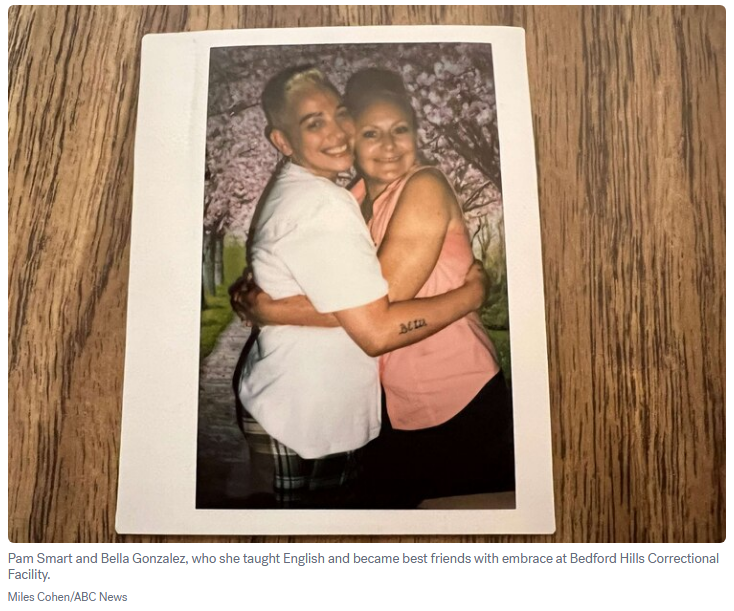
Taliyah Taylor served about 18 years in Bedford Hills. She has been incarcerated across the road in the medium-security Taconic Correctional Facility for more than a year.
In 2008, she was sentenced to 22 1/3 years-to-life for second degree murder and related charges. Allegedly high on Ecstasy, she raced through Staten Island and mowed down a popular local criminal defense lawyer, Larry Simon. When cops caught up with her, she was naked "and chanting lyrics to a rap tune," the Staten Island Advance reported. The judge who sentenced Taylor rejected the prosecution's request to give her even more time "out of respect for Larry," he said, because as a defense lawyer Simon would have wanted it that way.
Taylor earned a college degree at Bedford and organized with other women to improve living conditions. Before the HALT Act became law, she said, "I felt like I was going to college. We had a saying there about turning 'Jail into Yale.' I worked and went to school. I was on the honor dorm."
But after HALT became law, Taylor explained, "People feel like they can do anything and get any with it. There's no accountability. Violence has definitely increased."
"The HALT Act is definitely causing problems," Taylor emphasized.
Taylor revealed something Smart did not and Ntuli only suggested. That HALT created a disincentive for prisoners to follow the rules because some actually felt safer in the individual cells in the RRUs the HALT Act created to replace solitary confinement.
"Some girls think, 'Why should I behave when I can live better in the RRU?,'" Taylor said. "It's crazy to me that people would do something wrong and get rewarded. But sometimes that what it seems like is happening."
Before she was attacked by a genetic male in Albion's RRU, Ntuli told me she felt safer there.
Like Ntuil and Smart, Taylor believes HALT needs to be amended not totally repealed.
"The way they were doing it before the HALT Act was wrong too," she said. "They were sending people to the SHU for years and they were coming out crazy.”
Maybe the solution, Taylor suggested, is to amend HALT so that it doesn't apply to a less-severe form of solitary confinement known in New York's prison system as "keeplock."
"It's a lot easier to do keeplock time so maybe HALT shouldn't apply to it," Taylor said.
In keeplock, prisoners are locked in their own cells instead of being sent to a Special Housing Unit where everyone is subjected to solitary confinement or, worse, double-celling with someone else. Prisoners in keeplock, unlike those in solitary or double-celled in a SHU, are allowed to keep their personal property. But the bottom line, Taylor said, is there has to be accountability for misconduct and HALT made it impossible.
"I believe,” she told me, "when people do wrong they should be punished."
The lack of accountability has led to an increase in violence and drug use among prisoners in Taconic, Taylor said.
"The drugs started getting bad six months ago," she revealed. "We didn't have girls falling out before. Now we got girls falling out."
Taconic is "a small jail, about 200 people, and everyone has their own cell, which means there's less violence but it's been happening lately when it didn't really happen before."

Bushwick girl “gang” at Coney Island circa 2010. Photo credit: JB Nicholas
Meanwhile, after the guards' strike, Gov. Hochul commissioned a committee to study possible revisions to the HALT Act. The HALT Committee issued its final report Sept. 19. It recommended 10 minor changes to the law. None lengthen the maximum amount of time a prisoner can be held in solitary and so would not reduce the rising tide of violence the women described.
A coalition of former prisoners-turned-activists made their own recommendations for easing the crisis HALT and the loss of 2,000 guards unleashed. These focus on reducing the total number of people in New York's prisons by increasing opportunities for early release, thus lowering New York's overall prison population.
To date, the state legislature has not acted on either group's recommendations. It's scheduled to start its 2026 session Jan. 7.
Miller told me the guard's union would continue to ask lawmakers to amend the HALT Act
"Certainly," Miller said, "NYSCOPBA has since the HALT Act went into effect in April of 2022 advocated for the repeal or amendments to the HALT Act based on the rising violence in all prisons across the state."
"The statistics speak for themselves," Miller added, "they are at historic levels and there is no reason to believe that will change unless the disciplinary system is strengthened."
But State Senator Julia Salazar (D,WF-18), who sponsored the HALT Act and chairs the State Senate Committee on Crime Victims, Crime and Corrections, told me in an emailed statement "Assessing HALT's impact is impossible until DOCCS implements the law in full, and they still haven't done so more than four years after the Governor signed it."
"We are all too aware of what's actually exacerbating danger in the prisons," the Senator's statement added. "Mental health care and health care are inadequate to the point of utter crisis, while programs, recreation, and visitation are severely curtailed, leaving incarcerated New Yorkers increasingly idle and isolated."
"To make matters worse," Sen. Salazar's statement concluded, "staff has created an atmosphere of extreme violence, and the incarcerated don't feel there are realistic and clear pathways home. Put these factors together, and you have a recipe for unbearable anguish, illness, and worse."
Complicating the legislative picture it's an election year.
Historically, little criminal justice reform gets done in election years because politicians are afraid to be called "soft" on crime by opposing candidates. This year may be different for a number of reasons.
The election of Zohran Mamdani as mayor of New York City created a wave of Progressive momentum that may pull candidates to the Left, instead of Center.
Anthony Delgado, Gov. Hochul's former lieutenant governor, is running against his old boss in the primary for the Democratic nomination. Holding off his challenge may also pull Hochul to the Left.
Even New York's top judge declared in December "something has to be done" to fix the state’s criminal justice system.
"It isn’t working,” Rowan Wilson said earlier in 2025. “Maybe it hasn’t really ever worked."
Send tips or corrections to jasonbnicholas@gmail.com or, if you prefer, thefreelancenews@proton.me