FEDERAL CIVIL RIGHTS LAWSUIT CHALLENGING NEW YORK CITY'S STRICT GUN LAWS CAN PROCEED, FEDERAL APPEALS COURT RULES
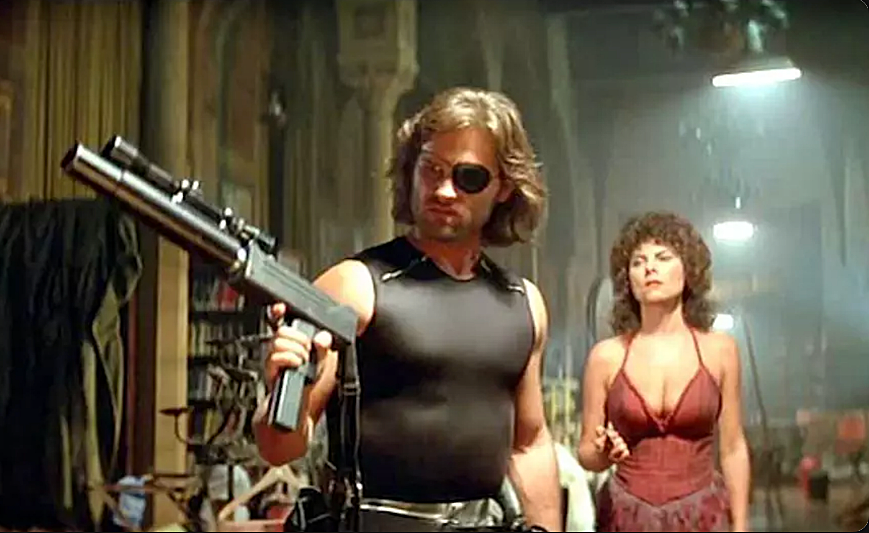
Kurt Russell as war hero-turned-convicted-bank robber SD "Snake" Plissken in 1981’s “Escape from New York.”
MALONE, NEW YORK Nov. 11, 2026
New York City has to defend its strict firearms laws from a suit by gun owners, a federal appeals court ruled on Tuesday.
One of the laws challenged in the suit bans New Yorkers from carrying more than one licensed handgun at a time.
"We vacate the challenged judgment," the Second Circuit Court of Appeals wrote in Mills v New York City, "and remand to the district court for further consideration of these claims."
The plaintiffs' victory before the appeals court doesn't mean they've won their case, but it does revive it and make it much easier for them to win.
In 2024, Federal District judge Jed S. Rakoff upheld the City's gun laws because, he wrote in his Dec. 5 decision, none of them—including the ban on carrying more than one gun at a time— “permanently deprive applicants of their right to own and carry firearms.”
But the Second Circuit decided that's not the right question to ask in a Second Amendment challenge.
"To the extent this suggests that the Second Amendment protects against only permanent or complete deprivations of the right to keep and bear arms, that is mistaken," the unanimous three-judge panel wrote.
Charles Mills, Craig Sotomayor and Braden Holliday filed the lawsuit. Mills lives in Queens, Holliday lives in the Bronx and Sotomayor lives in Nassau County but is licensed to carry a handgun in New York City.
In addition to the law banning the carrying of more than one gun, the plaintiffs challenged fees the City requires to obtain required licenses; a mandatory 90-day waiting period between handgun purchases; and a ban on registering more than two handguns to a single carry license.
The Second Circuit upheld the dismissal of the plaintiff's challenge to the fees because a prior, 2013 decision of the court, Kwong v Bloomberg, upheld them and the Supreme Court has not changed the governing constitutional principles since.
But the appeals court allowed all three of the plaintiff's remaining challenges to go forward, and sent the suit back down to the district court for more hearings.
The appeals court spent four pages dismantling the reasoning of Judge Rakoff's decision.
Basically, Judge Rakoff failed to follow the rules for deciding Second Amendment cases mandated by the US Supreme Court's 2022 decision in New York State Rifle & Pistol Ass’n, Inc. v Bruen.
Bruen prescribes a two-step inquiry. The first step is: does the challenged law "infringe" on the "keeping" or "bearing" of "arms" by "the people"? The second asks whether there was a comparable regulation or restriction in 18th and 19th Century America that was relatively common and not an "outlier"?
By endorsing only "temporary," or non-permanent deprivations of Second Amendment rights, Judge Rakoff's ruling ignored Bruen. That's not how it works for other constitutional rights and that's not how it's works for Second Amendment rights either, the Second Circuit clarified in Mills.
"Whether modern regulations are analogous to such traditional restrictions is a question on which the government bears the burden at step two of the Bruen analysis," the Second Circuit wrote, "regardless of whether the challenged limitation affects a permanent or temporary deprivation of the right."
The Second Circuit's decision in Mills is also notable for its incorporation of the Supreme Court's most recent Second Amendment decisions into Second Circuit law.
United States v Hemani and Wolford v Lopez, both handed down last June, sharpen and clarify the two-step inquiry required by Bruen. In deciding whether a historical firearm regulation is comparable to a modern one, Hemani and Wolford require that the old one was aimed at the same evil and that it operated in the same way the new one operates.
Citing Hemani and Wolford, the Second Circuit wrote in Mills that the "focus of the Bruen step-two inquiry is on how and why a regulation operates, to determine its consistency with historic firearm regulation."
The big picture here is that the Second Circuit, based in Manhattan, has been slow to recognize the sea change in Second Amendment law wrought by Bruen. Some might say its judges have been waging a rear-guard action against Bruen since it was decided. But Hemani and Wolford rob that resistance of even a veneer of legitimacy. Mills recognizes that, and forces the Second Circuit to fully adopt Bruen.
On remand before Judge Rakoff, the City of New York will bear the burden of proving that the the 90-day waiting period, the ban on registering more than two handguns to one carry license and the ban on the carrying of more than one gun at a time are "consistent with the Nation’s tradition of firearm regulation."
That's going to be a high hurdle for the City to surmount.
The plaintiffs won't have to prove a thing because, under Bruen, they've already proved all they have to: that they're among "the People" and that the conduct they seek to engage in is protected by the Second Amendment but restricted by the City's strict gun laws.
"We conclude that the constitutionality of such limitations is properly determined at step two of the Bruen analysis, where the government bears the burden of showing that the restrictions imposed are consistent with 'the historical tradition that delimits the outer bounds of the right to keep and bear arms.'”
Send tips or corrections to jasonbnicholas@gmail.com or, if you prefer, thefreelancenews@proton.me